
From Lawn to Living Landscape: Designing the Garden at the Flood Safety Disrict
At first glance, a typical lawn is just a green, open space to gather for social events. But beneath the surface, there is a different story: compacted soils, high water demand, and stormwater runoff with limited opportunities to soak into the ground.
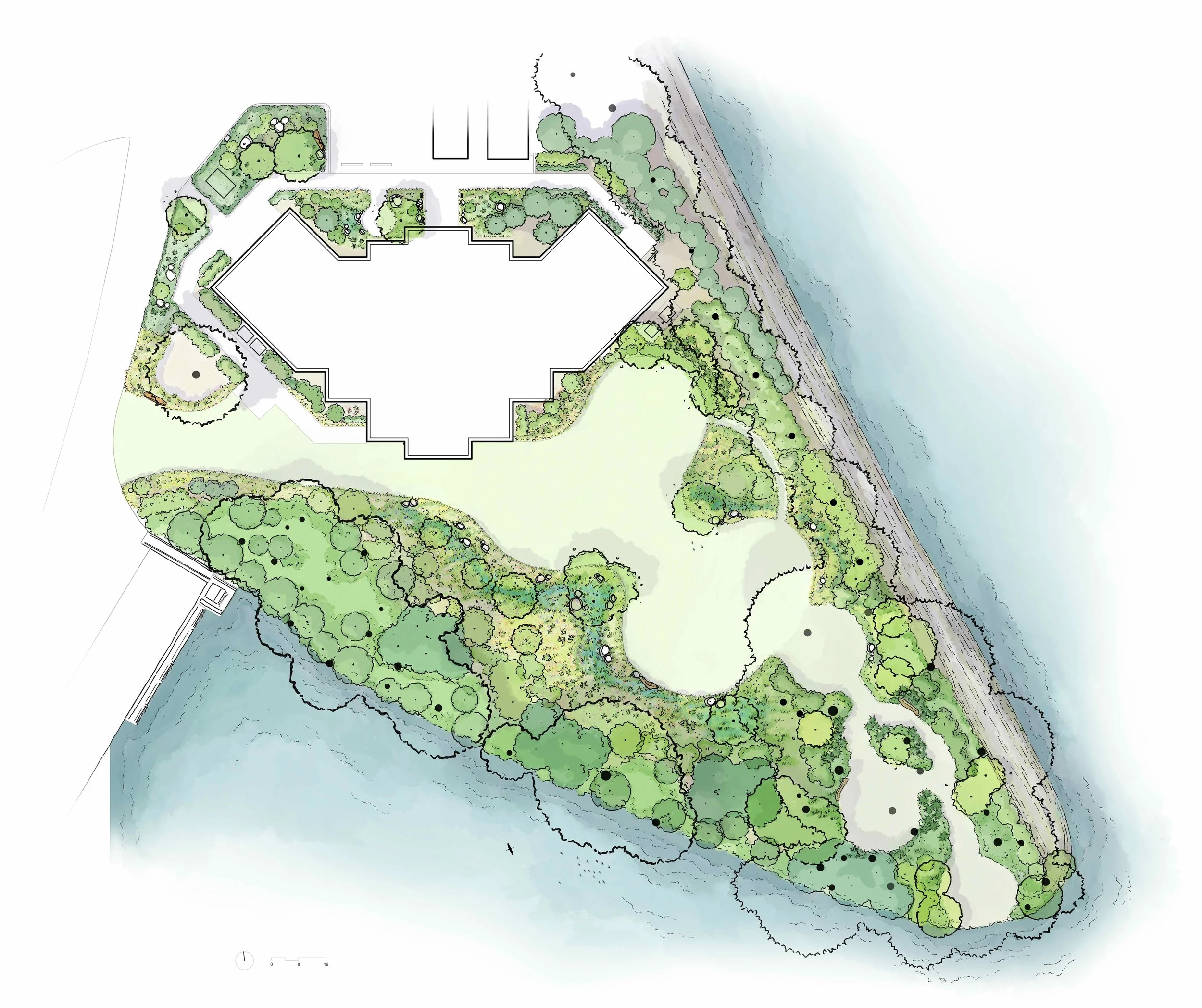
Through a collaborative effort between the Flood Safety District, Columbia Slough Watershed Council, and Phoenix Habitats, the lawn at District headquarters has been reimagined as a demonstration garden, one that shows how thoughtful design can transform underperforming turf into a functional, resilient system.
Reducing the Lawn: Why It Matters
Lawns are a common feature in urban landscapes, but they often come with hidden costs. Traditional turf requires consistent watering to stay green, especially during the dry summer months. In contrast, native plants are better suited to local conditions and require significantly less supplemental water once established.
Frequent foot traffic and mowing can compact lawn soils over time, reducing their ability to absorb water. Instead of soaking into the ground, rainwater runs off the surface, carrying pollutants and contributing to localized flooding. By reducing the amount of turf, we created space for a landscape that slows, spreads, and sinks stormwater, while also reducing long-term maintenance inputs.
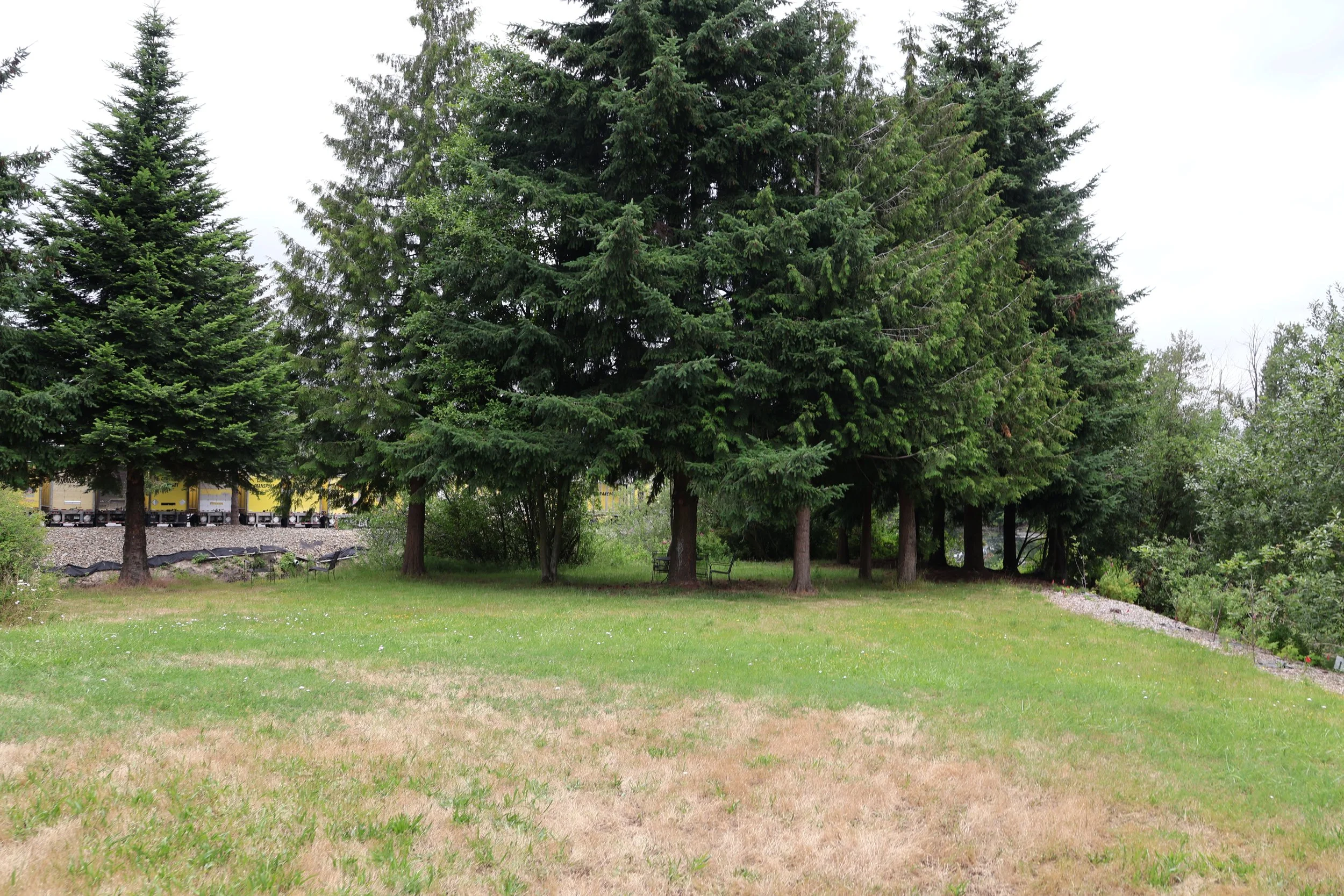
Before project began
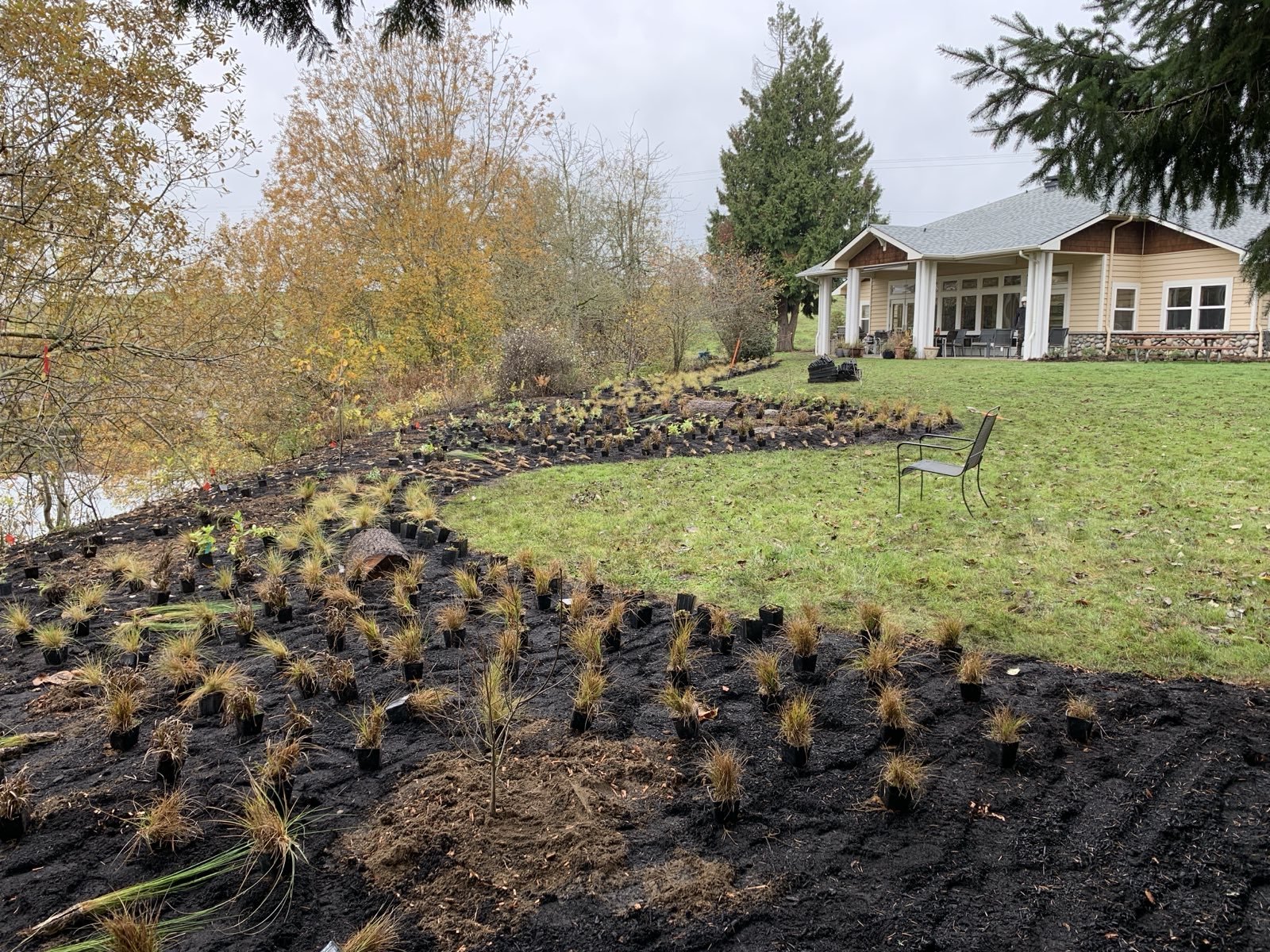
Planting in progress
Balancing Function, Aesthetics, and Use
While reducing lawn was a priority, the goal wasn’t to eliminate it entirely. This space still needs to function for people, especially during large events hosted on-site. The design team at Phoenix Habitats focused on two key objectives:
Preserve enough lawn area to accommodate gatherings and flexible use
Improve day-to-day usability by creating more defined, inviting spaces
By reshaping the lawn rather than removing it, the site now feels more intentional. Planted areas help guide movement, create visual interest, and make the space more welcoming when events aren’t taking place.
The decision to reduce the lawn by approximately 35% was not arbitrary; it was shaped by several key considerations.
Site conditions: existing drainage patterns, soil conditions, and how water currently moved through the site all informed where changes would have the greatest impact.
Maintenance capacity: any new landscape features must be maintainable over time. The design balances ecological function with realistic upkeep needs for staff and partners.
Demonstration value: As a demonstration garden, the site is meant to inspire! The design showcases strategies that can be replicated elsewhere.
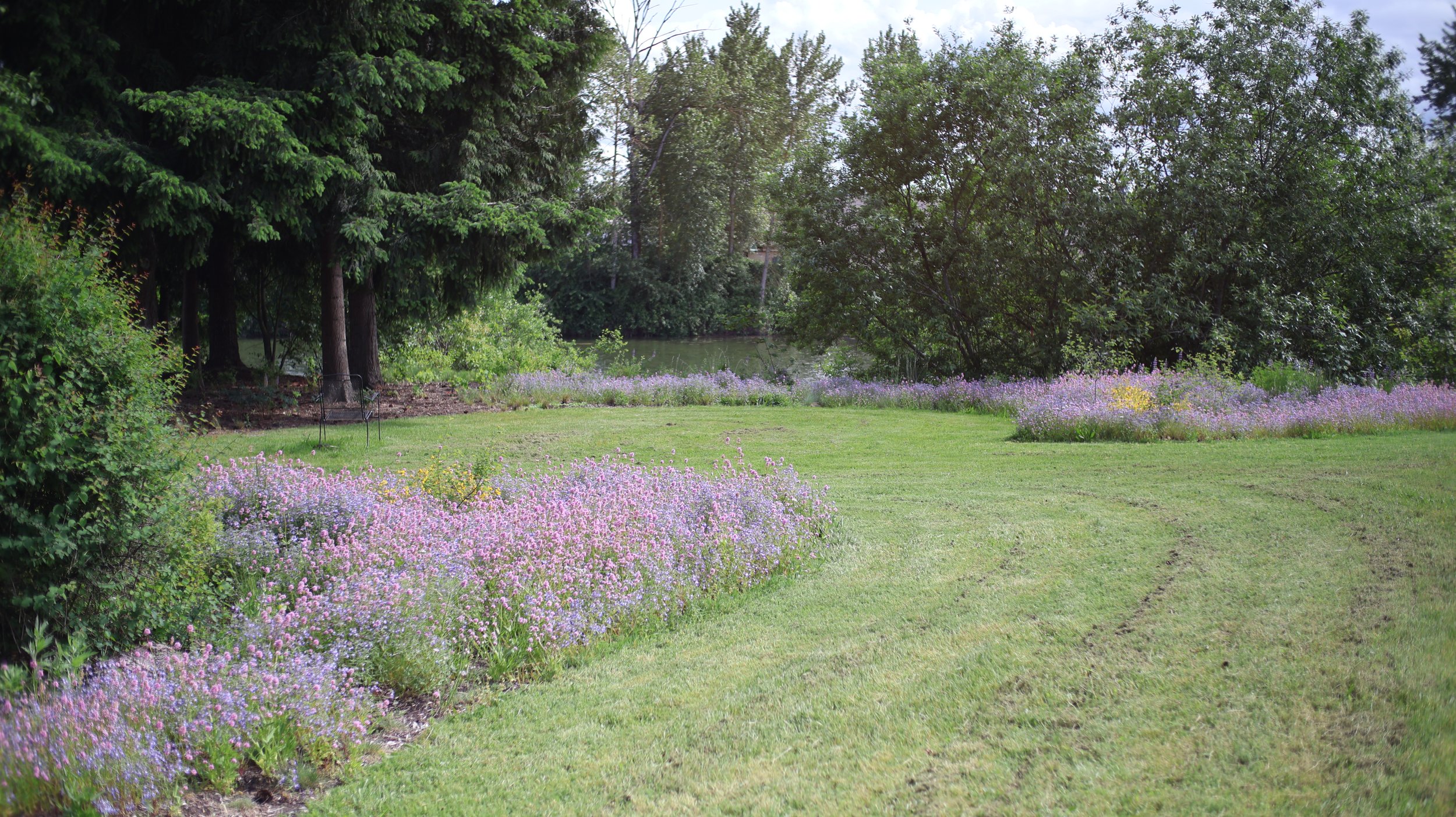
After planting, Spring 2026
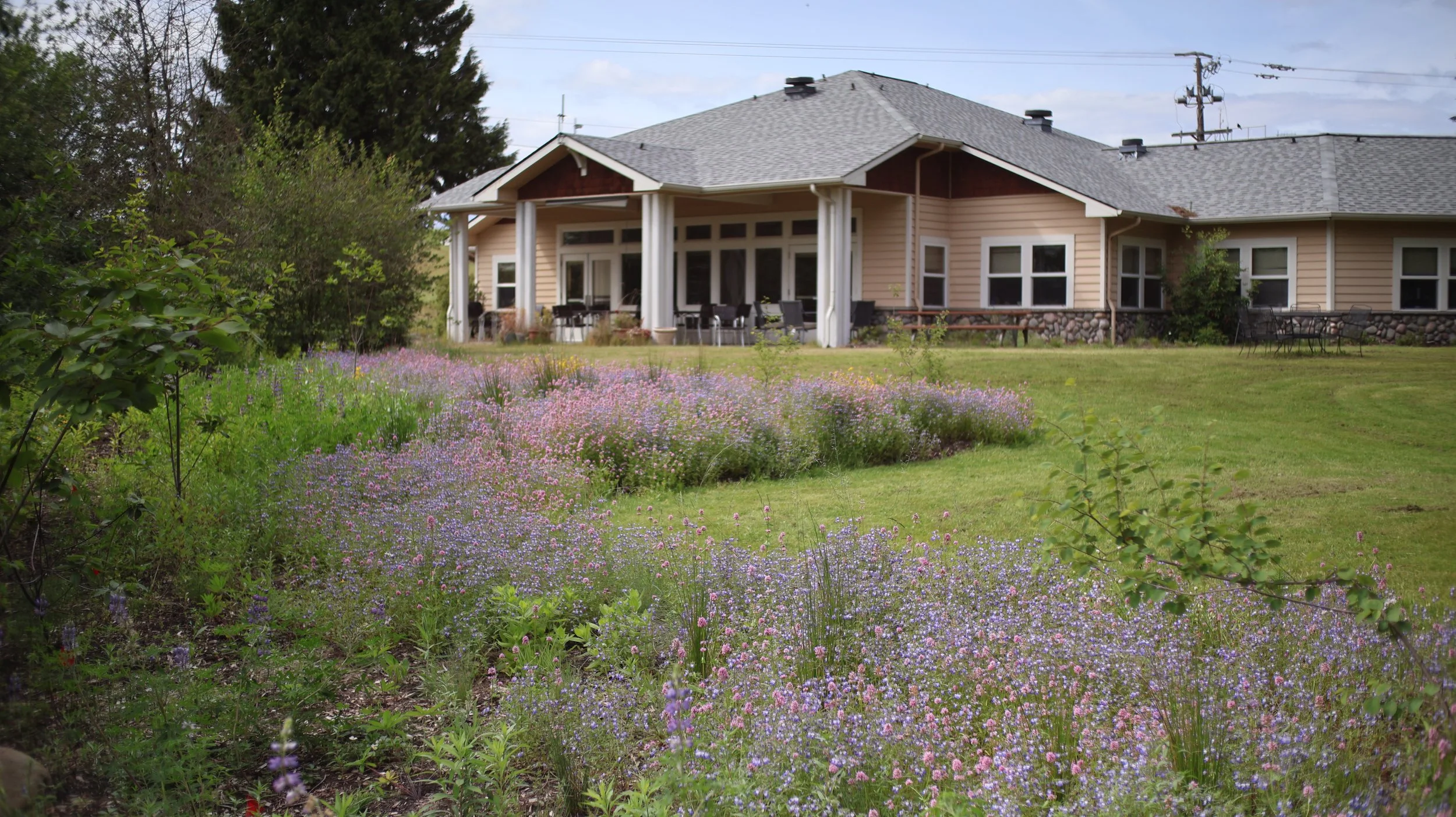
At the heart of this project is a shift in thinking – from landscape as decoration to landscape as infrastructure. Instead of moving water off-site as quickly as possible, the garden is designed to capture stormwater where it falls. Through amended soils, strategic plantings, and subtle grading, rainwater is slowed, spread out, and absorbed into the ground.
At the same time, the garden was designed with people in mind. As a highly visible, public-facing space, it was important that the landscape feel welcoming and intentional. Thoughtful plant selection, layout, and structure ensure that the site is not only functional, but also visually engaging.
This transformation reflects what’s possible when we rethink the role of everyday spaces. By reducing turf and designing with water, soil, and habitat in mind, this site now works harder for both people and the environment. As the garden continues to grow in, it will serve as an evolving example of how urban landscapes can meet the challenges of water management, climate resilience, and community use!